

Greaseproof Paper and Vacuum Pouches: The Ultimate Food Packaging Guide
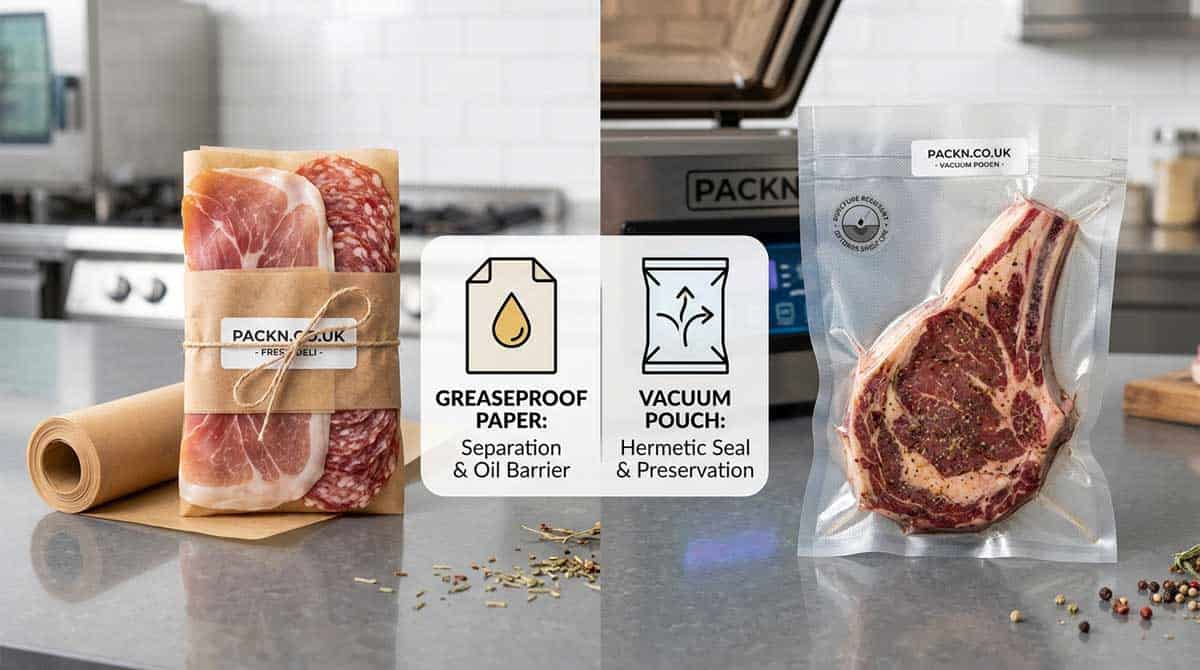
Greaseproof paper and vacuum pouches are two of the most essential materials used across commercial kitchens, butcher shops, and deli counters. While greaseproof paper provides an immediate grease barrier and surface separation, heavy-duty vacuum pouches extract oxygen to preserve perishable foods for weeks or months.
Combining greaseproof paper and vacuum pouches creates an all-in-one packaging system that prevents bag punctures, improves seal integrity, and maintains product presentation during distribution.
1. Direct Comparison
| Feature | Greaseproof Paper | Vacuum Pouches |
| Primary Material | Siliconized or wax-free wood pulp | Multi-layer co-extruded Nylon/Polyethylene (60+ micron) |
| Main Function | Moisture/fat barrier & layer separation | Oxygen extraction & hermetic sealing |
| Air Sealing Ability | Non-airtight (Permeable) | Airtight (Removes ~99.9% of internal oxygen) |
| Freezer Protection | Low (Susceptible to frost build-up) | Exceptional (Eliminates void space for ice crystals) |
| Puncture Resistance | Acts as a physical buffer layer | High tensile strength; vulnerable to sharp bones under high vacuum pressure |
| Best Used For | Interleaving sliced meats, wrapping burgers, bone protection | Fresh meats, hard cheeses, sous vide cooking, long-term cold storage |
2. Why Combine Greaseproof Paper with Vacuum Pouches?
Commercial kitchens, butcher shops, and delicatessens frequently pair these two materials to resolve common vacuum sealing challenges.
Greaseproof Paper
-

Bleached Greaseproof Paper 500 x 750mm
£29.39 Ream -
Pure Greaseproof Paper 254 x 381mm
£10.67 Ream
1. Bone-Guard Protection
- The Problem: Sharp bone ends (such as T-bone steaks, ribs, or lamb shanks) can easily pierce a plastic pouch during vacuum extraction, causing the pack to lose its seal.
- The Solution: Wrapping bone tips in heavy-duty greaseproof paper creates a padded barrier layer, preventing punctures and keeping the pouch airtight.
2. Interleaving Sliced Goods
- The Problem: High chamber pressure fuses sliced items (such as prosciutto, bacon, or sliced cheeses) into a single solid block.
- The Solution: Placing sheets of greaseproof paper between individual slices keeps them separated, allowing end consumers to peel individual portions without tearing the product.
3. Seal-Area Cleanliness
- The Problem: Excess grease or marinade near the bag opening interferes with the heat-seal strip, resulting in weak or leaking seals.
- The Solution: Wrapping oily cuts in greaseproof paper before inserting them keeps the upper neck of the vacuum pouch clean, ensuring a firm heat seal.
3. Recommended Uses by Product Category
- Fresh Prime Cuts & Bone-In Meat: Wrap sharp bone edges in greaseproof paper, insert into a vacuum pouch, and run through a chamber vacuum sealer.
- Cold Cured Meats & Artisan Cheeses: Interleave slices with greaseproof paper sheets before vacuum sealing to maintain product appearance and portion control.
- Burger Patties & Meal Prep Containers: Stack patties with greaseproof separators prior to bulk vacuum sealing or chilling.
Vaccum Pouches
-

Vacuum Pouches 140 x 170mm (1,000/Case)
£30.80 Case -
Vacuum Pouches 160 x 200mm (1,000/Case)
£35.20 Case -
Vacuum Pouches 200 x 250mm (1,000/Case)
£46.20 Case -
Vacuum Pouches 200 x 300mm (1,000/Case)
£55.00 Case -
Vacuum Pouches 250 x 300mm (1,000/Case)
£93.50 Case -
Vacuum Pouches 300 x 300mm (1,000/Case)
£104.50 Case -
Vacuum Pouches 300 x 400mm (1,000/Case)
£124.00 Case -
Vacuum Pouches 400 x 500mm (500/Case)
£124.49 Case
4. Frequently Asked Questions
Can greaseproof paper go inside a vacuum chamber sealer?
Yes. Food-grade greaseproof paper is fully compatible with vacuum chamber machines and will not release gases or degrade under standard vacuum cycles.
Is greaseproof paper safe for sous vide cooking?
Standard greaseproof paper is safe for mild temperature heating, but for high-heat or long-duration sous vide cooking, ensure the paper is unbleached, silicone-coated, and rated for high-moisture thermal processing.